
Acne Myths and Facts: 5 Common Beliefs Dermatologists Want You to Stop
Table of Contents
ToggleIntroduction
It‘s common for individuals to search the internet, rather than reach out to their doctor, for a sudden outbreak. Although well-meaning, there are numerous “old wives tales” and “DIY hacks” within the world of skin care which can cause significantly more harm than the acne itself.
At Soul Skin Clinic, we see patients who have been trying to “scrub away” their acne and used kitchen ingredients for the last few months – or even years – and then come to our clinic in Anna Nagar with irritated and scarred skin.
It‘s time to set the record straight! Here are the 5 most frequent myths we are exposed to at the clinic and the science you should understand about how to achieve clear skin.
Myth 1: “You aren’t washing your face enough.”
This is perhaps the most hurtful myth because it implies that acne is a result of being “dirty.”
The Reality
Acne has very little to do with hygiene. It is an inflammatory condition triggered by hormones, oil production, and bacteria trapped deep inside the pore—not just on the surface.
In fact, washing your face too often (more than twice a day) or using harsh “scrubs” can actually make your acne worse. When you strip away your skin’s natural oils, your brain signals your oil glands to work overtime to replace them. This leads to more oil, more clogs, and more breakouts.
Pro Tip: Use a gentle, soap-free cleanser. If you live in a humid spot like Chennai, once in the morning and once at night is plenty.
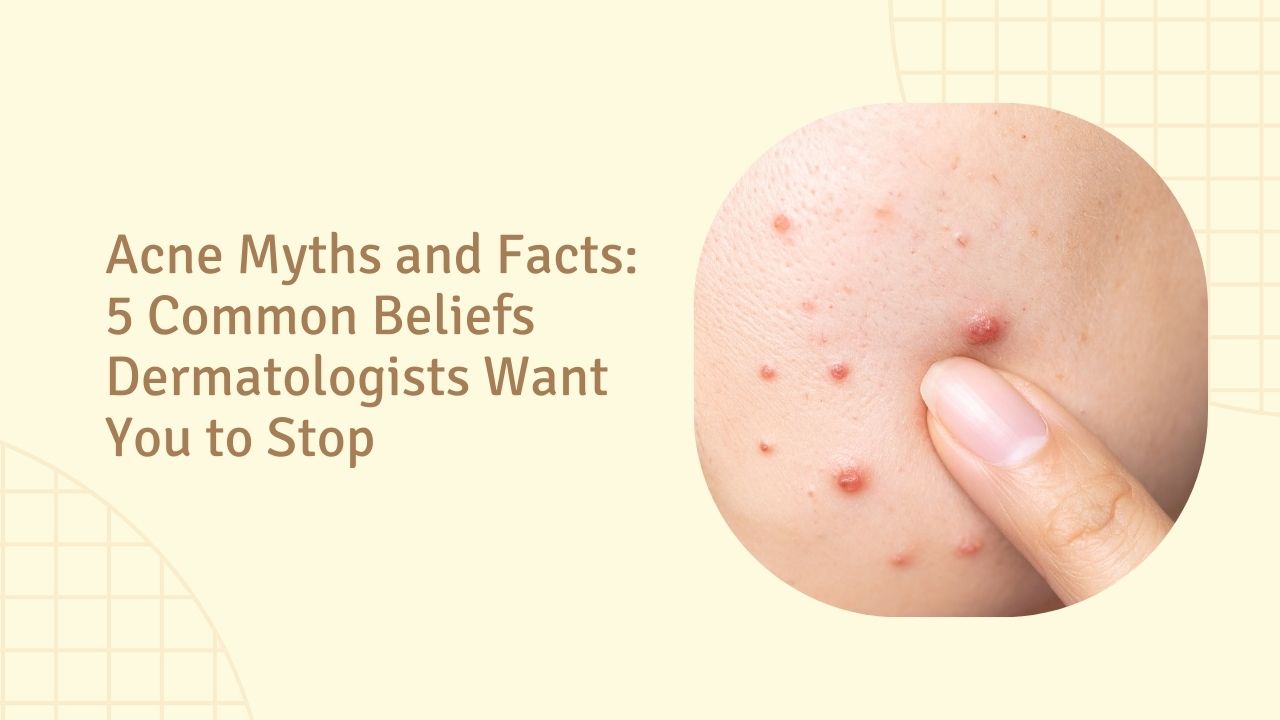
Myth 2: “Toothpaste is a great spot treatment.”
We’ve all seen the “hack” where you dab a bit of minty toothpaste on a pimple to “dry it out” overnight.
The Reality
While toothpaste contains drying agents like baking soda or alcohol, it also contains menthol, fluoride, and fragrances that are highly irritating to the skin. Applying this to an already inflamed pimple can cause a chemical burn or leave behind a dark, stubborn mark (Post-Inflammatory Hyperpigmentation) that takes months to fade.
Pro Tip: Swap the toothpaste for a dermatologist-approved spot treatment containing Salicylic Acid or Benzoyl Peroxide. They target the bacteria without burning your skin barrier.
Myth 3: “Sun exposure clears up pimples.”
There is a common belief that “drying out” your skin in the sun helps heal acne.
The Reality
The Reality: While a tan might temporarily mask the redness of your acne, the UV rays are actually damaging your skin’s repair mechanism. Sun exposure causes the skin to thicken and produce more dead skin cells, which eventually leads to more clogged pores a few weeks later.
Furthermore, if you are using acne medications like Retinoids or AHAs, your skin is extra sensitive to the sun. Skipping sunscreen will lead to permanent scarring and darkening of your acne spots.
Myth 4: "You have to let acne 'run its course'."
Many people believe that acne is just a “phase” and you should wait for it to go away on its own.
The Reality:
Waiting is the worst thing you can do for your skin’s future. Every month that you have active, inflammatory acne, you are at risk for permanent scarring. Pitted scars (the ones that look like small holes in the skin) are much harder and more expensive to treat than active acne.
Modern dermatology, like the treatments we offer at Soul Skin Clinic, can stop the inflammation quickly, preventing the “scars of the future” from ever forming.
Myth 5: “Oily skin doesn’t need moisturizer.”
“Why would I add more moisture to skin that’s already greasy?” It sounds logical, right?
The Reality:
Oil and moisture are two different things. Your skin produces oil (sebum) to protect itself, but it needs water (hydration) to stay healthy. When acne-prone skin becomes dehydrated, it loses its ability to heal.
The key is finding the right texture. If you have oily or acne-prone skin, look for “Gel-based” or “Water-based” moisturizers that are labeled Non-Comedogenic (meaning they won’t clog pores).
Why a Professional Consultation Changes Everything
The reason these myths persist is that they offer “quick fixes.” But your skin is a living organ, not a project to be DIY-ed.
At Soul Skin Clinic, Dr. Charanya takes the time to explain the why behind your breakouts. Whether it’s a Medical-Grade Chemical Peel to gently exfoliate or a Carbon Laser treatment to kill bacteria at the root, our goal is to give you a routine that is backed by science, not myths.
Stop listening to the internet and start listening to your skin.
About the Author: Dr. Charanya (MD DVL)
Dr. Charanya is the founder and Chief Dermatologist at Soul Skin Clinic, Anna Nagar. With an MD in Dermatology, Venereology, and Leprosy, she has dedicated her career to blending advanced medical science with a holistic approach to skin and hair care.
Known for her “skin-first” philosophy, Dr. Charanya specializes in treating complex acne, hormonal skin concerns, and advanced aesthetic procedures. Her goal is not just to treat symptoms, but to empower her patients with the knowledge and treatments they need to feel confident in their own skin. When she isn’t at the clinic, she is a passionate advocate for evidence-based skincare education, helping people navigate the noise of the beauty industry with clinical facts.
Additional References
In an era of “Skin-fluencers” and viral DIY hacks, it’s easy to get lost in bad advice. The truth is, your skin is unique, and what worked for a stranger on the internet might actually harm your skin barrier. Acne isn’t a sign of poor hygiene, and it’s not something you should have to “wait out.” By debunking these myths and choosing science over trends, you’re not just clearing your skin—you’re protecting its health for years to come.
Conclusion
In an era of “Skin-fluencers” and viral DIY hacks, it’s easy to get lost in bad advice. The truth is, your skin is unique, and what worked for a stranger on the internet might actually harm your skin barrier. Acne isn’t a sign of poor hygiene, and it’s not something you should have to “wait out.” By debunking these myths and choosing science over trends, you’re not just clearing your skin—you’re protecting its health for years to come.
Frequently Asked Questions
Should I stop using moisturizer if I have oily, acne-prone skin?
Absolutely not. Skipping moisturizer can make your skin dehydrated, causing it to produce more oil to compensate. The secret is using a “non-comedogenic,” gel-based moisturizer that hydrates without clogging pores.
Is it okay to pop a pimple if I use a clean needle?
We strongly advise against it. Even with a “clean” needle, the pressure of squeezing pushes bacteria and inflammation deeper into the skin, which is the leading cause of permanent pitted scars. It’s always safer to let a professional handle extractions.
Can certain foods really clear my skin?Can certain foods really clear my skin?
While no single food is a “magic pill,” a diet low in refined sugars and dairy has been scientifically shown to reduce acne inflammation. Pairing a healthy diet with professional clinical treatments is the fastest way to see results.
Is "Medical Grade" skincare really better than expensive luxury brands?
Yes, and here is why: Luxury brands often spend more on packaging and fragrance than on active ingredients. “Medical Grade” (Cosmeceuticals) brands used at our clinic contain higher concentrations of active ingredients like Retinol or Vitamin C that are stabilized to actually penetrate the skin barrier and create change at a cellular level.
Does wearing makeup every day cause more acne?
Not necessarily. It’s not the makeup itself, but the type of makeup and how you remove it. If you use “oil-free” and “non-comedogenic” products and follow a double-cleansing routine at night, you can wear makeup without clogging your pores. We often recommend specific acne-safe brands for our patients who prefer daily coverage.
Ready to Sculpt Your Best Self?
-
Clinic Hours:
Monday-Sunday, 12:00 PM - 8:00 PM