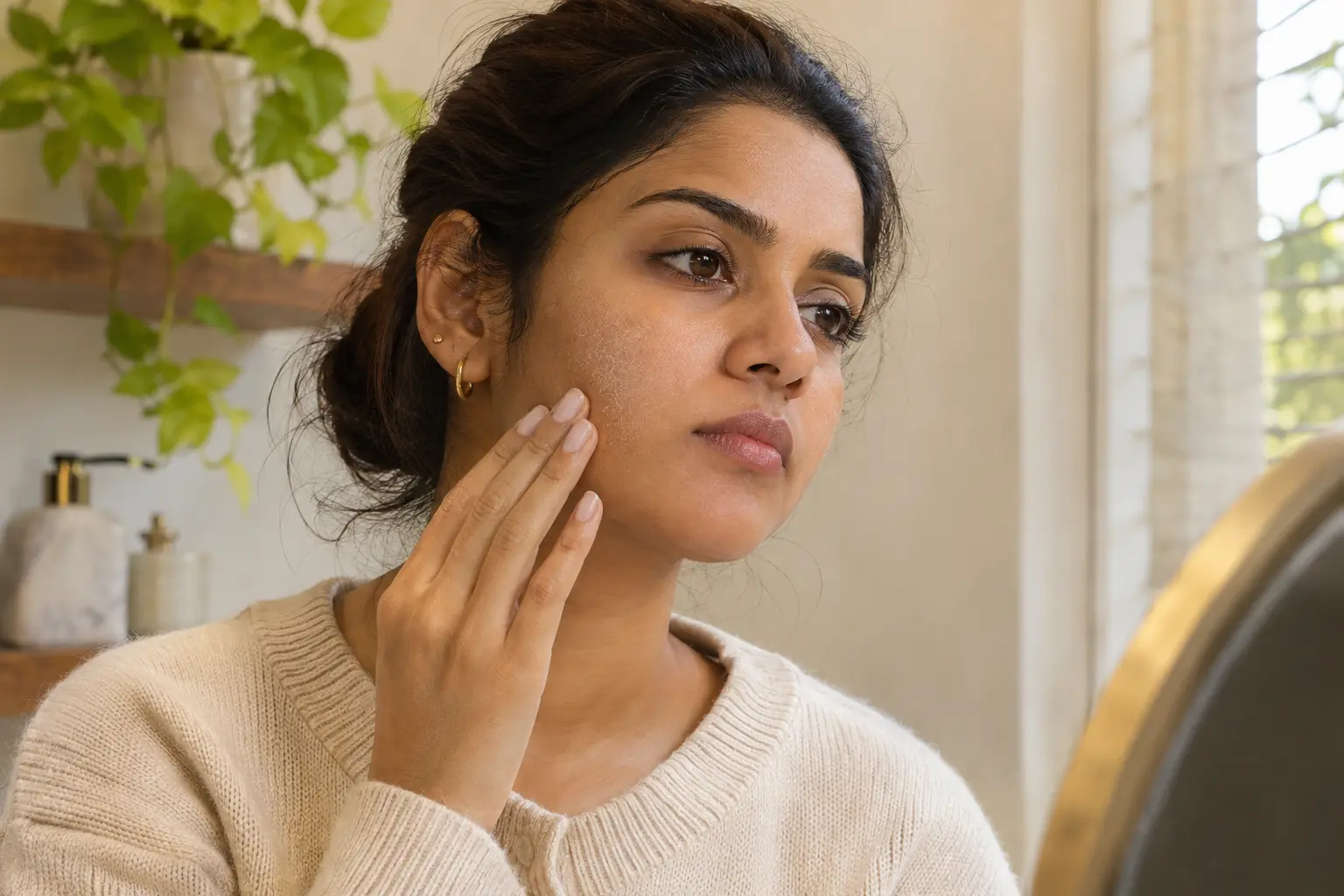
Aging does not happen all at once. It moves in stages, often so gradually that most people only notice when a new milestone appears. A fine line under the eyes at 28. A deeper crease between the brows at 38. A visible change in skin firmness at 48.
Each stage asks something different from your skin. And each one responds to a different clinical approach.
What fails most people is treating every sign of aging the same way. The protocols suited to early-stage fine lines are not what a patient with deep creases and volume loss needs. Using the wrong approach at the wrong stage produces no visible result, or may worsen the very concern the treatment is intended to improve.
What Aging Does to Skin, Stage by Stage
The skin ages through two overlapping processes. Intrinsic aging is biological. Cell turnover slows. Collagen production decreases gradually from your mid-20s onward. Elastin fibres weaken. The skin becomes less able to repair itself quickly.
Extrinsic aging is driven by external forces. UV exposure, pollution, and accumulated sun damage all accelerate visible signs. In Chennai's climate, UV exposure is a year-round reality. Patients here often see accelerated pigmentation and surface changes alongside structural aging.
The two do not always track together. Someone at 35 with significant sun exposure history can have skin that behaves like someone at 50 in terms of texture and tone. A clinical assessment is what tells you where your skin actually is.
Stage One: Fine Lines and Surface Changes
The first visible signs typically appear in the late 20s and early 30s. Fine lines around the eyes, a slight loss of luminosity, and the beginning of uneven skin tone are characteristic of this stage.
What is happening underneath is a gradual reduction in hyaluronic acid and early collagen loss. The skin barrier is still largely intact, but less efficient than it was at 22.
This stage responds very well to early clinical intervention. Korean skin rejuvenation at Soul Skin Clinic uses medical-grade hydration and collagen-stimulating protocols to address these surface changes before they deepen. Early clinical care consistently produces the best long-term outcomes.
Stage Two: Defined Lines, Loss of Firmness, and Pigmentation
As people enter their mid-30s and 40s, age-related changes begin to affect the skin’s underlying structure. Fine lines deepen into defined creases. The skin loses some of its elasticity, and early softening appears at the jawline and mid-face. Pigmentation from accumulated UV exposure becomes more pronounced.
This is the stage where over-the-counter products clearly reach their limit. The skin needs clinical-level collagen stimulation and cellular repair, not surface moisturisation.
PRP skin care at Soul Skin Clinic uses the patient's own platelet-rich plasma to stimulate collagen and elastin regeneration from within. It works at the dermal level, addressing structural changes rather than surface appearance. For patients managing pigmentation alongside structural aging, laser care can address discolouration and texture simultaneously, with protocols calibrated to your current skin type and sensitivity.
Dr. Charanya evaluates the degree of structural change before recommending any protocol. The combination of interventions is always specific to your skin.
Stage Three: Deep Wrinkles, Volume Loss, and Laxity
From the late 40s onward, the aging process involves significant structural change. Deep wrinkles form at the nasolabial folds, around the mouth, and on the forehead. Volume loss in the cheeks and temples creates a hollowed appearance. Skin laxity becomes visible at the jawline and neck.
The skin is also thinner at this stage, more sensitive to UV exposure, and slower to recover. The clinical approach here is entirely different from stages one or two.
Exosome therapy works at a cellular communication level, stimulating regeneration processes that standard collagen boosters cannot access. For patients with visible laxity, face lifting protocols at Soul Skin Clinic are designed to restore structural support without surgery. CO2 laser is effective for surface resurfacing and deep wrinkle reduction when the skin has sufficient recovery capacity.
Every protocol is calibrated to your skin's current recovery ability and the visible degree of change. The result is genuine structural improvement.
The Most Common Mistake in Anti-Aging Care
Most patients arrive at the clinic having already spent significant money on the wrong approach. The problem is rarely the products alone, but rather the timing of treatment and how precisely it addresses their skin concerns.
Patients in stage one are sometimes given protocols designed for stage three, which is aggressive and unnecessary. Patients in stage three are still using stage-one surface products, which produce no meaningful result.
The correct starting point is an objective clinical assessment of where your skin is. Not which age group you fall into, but what your skin's actual structural and functional state is right now. That determines the protocol. That determines the result.
For patients managing skin pigmentation or open pores alongside aging concerns, Dr. Charanya integrates these into a single coordinated care plan. Addressing multiple concerns through disconnected protocols produces inconsistent results.
Anti-aging care at Soul Skin Clinic always begins with a full skin assessment. The protocol follows the assessment, not the other way around.
If your skin has changed and you are not confident your current approach is right for where you are, that is worth getting properly evaluated.
Book a consultation with Dr. Charanya at Soul Skin Clinic, Anna Nagar, via WhatsApp or call us directly.