
At Soul Skin Clinic in Anna Nagar, every melasma case begins with a thorough and detailed diagnosis. Understanding whether pigmentation lies on the surface or deeper layers of the skin is essential for creating the most effective treatment plan. Here’s how our dermatologists accurately identify melasma and its depth:
Melasma Treatment in Anna Nagar: Dermatologist’s Complete Guide
Table of Contents
ToggleIntroduction - Why melasma is common in Indian women (genetics + sun Exposure
Melasma is a common skin disorder in the form of brown or gray-brown patches, mostly localized on the face like the cheeks, forehead, and chin. Melasma is most prevalent among Indian women, suggesting a specific overlap of hormonal, environmental, and genetic factors promoting its development. In order to treat and manage melasma optimally, knowledge of its etiologies is a must.
It has been established that melasma is strongly linked to genetic disposition. Most women who have a history of the condition among their relatives are prone to its occurrence, making general awareness and early detection vital. In many cases, melasma also emerges or becomes severe in cases of hormonal fluctuation like pregnancy or when on oral contraceptives, adding to the complexity of management.
What is Melasma?
1. Medical Definition (Hyperpigmentation Disorder)
Melasma is a long-lasting hyperpigmentation disorder marked by brown or grey-brown patches that appear symmetrically on sun-exposed areas of the face. It occurs when melanocytes, the pigment-producing cells in the skin, produce excessive melanin, the natural pigment responsible for skin colour.
While melasma is not harmful, it can be emotionally distressing due to its visible nature and tendency to reappear. The condition is especially common among women of reproductive age with medium to dark skin tones (Fitzpatrick skin types III–V).
Dermatologists classify melasma into three main types based on how deeply the pigment is deposited:
- Epidermal Melasma: Increased melanin in the upper skin layers; responds well to topical treatments.
- Dermal Melasma: Melanin deposited deeper in the dermis; more resistant to treatment.
- Mixed Type: A combination of both epidermal and dermal pigmentation.
2. Brown or Gray Patches on the Face (Cheeks, Forehead, Upper Lip)
The hallmark of melasma is the appearance of flat, uneven brown or greyish patches on the face — especially on the cheeks, forehead, upper lip, nose bridge, and chin.
These patches develop gradually and often darken with sun exposure, as ultraviolet (UV) light activates melanocytes to produce more pigment. The colour may vary from light brown to slate gray, depending on the depth of pigmentation.
Common facial distribution patterns include:
- Centrofacial pattern: Forehead, nose, upper lip, cheeks, and chin
- Malar pattern: Cheeks and nose area
- Mandibular pattern: Jawline and lower face
Unlike other skin conditions, melasma does not cause itching, pain, or scaling — it only affects skin tone and uniformity, leading to a visibly uneven complexion.
3. Hormonal Triggers (Pregnancy, Birth Control, PCOS)
Hormonal fluctuations play a major role in triggering or worsening melasma. Elevated estrogen and progesterone levels stimulate melanocytes, leading to excessive pigment production.
Common hormonal causes include:
- Pregnancy (Chloasma or “Mask of Pregnancy”): Common during the second and third trimesters when hormone levels peak.
- Oral Contraceptive Pills (Birth Control): Synthetic hormones can mimic pregnancy effects, causing pigmentation.
- Polycystic Ovary Syndrome (PCOS): Hormonal imbalance and increased androgens contribute to pigmentation irregularities.
In many cases, melasma caused by hormonal changes fades naturally once hormone levels normalise — such as after childbirth or discontinuing contraceptives. However, sun exposure can prolong or worsen pigmentation, making sun protection vital.
4. Typical Melasma Patterns (Visual Reference)
Though images are not shown here, clinical melasma cases typically appear as:
- Centrofacial Pattern: Symmetrical dark patches on the forehead, nose bridge, upper lip, and chin — resembling a facial mask.
- Malar Pattern: Brownish pigmentation on both cheeks, sparing the nose.
- Mandibular Pattern: Dark patches along the jawline and lower cheeks extending toward the neck.
Dermatologists often perform a Wood’s Lamp Examination to assess the depth of pigmentation (epidermal or dermal) — an important step in designing the most suitable melasma treatment plan for long-term improvement.
Melasma is a complex form of pigmentation characterized by brown or grayish-brown skin patches symmetrically occurring on the face, particularly on the cheeks, forehead, upper lip, and nose. This develops if there is over-activity in the pigment-producing cells of the skin, called melanocytes, producing too much melanin, causing a darkening of the skin that becomes visible.
In Chennai’s tropical climate with bright sunlight throughout the year, melasma is undoubtedly common, especially among women. Knowing its causes and therefore its possible triggers is important for its long-term management or effective treatment of melasma in Anna Nagar.
Melasma results from both intrinsic factors, such as genetics and hormonal influences, and extrinsic precipitants, including UV exposure, heat, and cosmetics. Let us go into details of each.
1. Exposure to the Sun:
- UV Damage in Chennai’s High UV Index.
- UV radiation from sunlight is the most significant trigger for melasma.
- The UV index in Chennai’s climate often ranges between 11 and 12, which falls under the category of extreme risk regarding pigmentation.
- UV rays penetrate deep into the skin to stimulate melanocytes, which then increase melanin production, causing or worsening dark patches on the face. Even a few minutes of daily unprotected exposure can reactivate dormant pigmentation.
To head off flare-ups, dermatologists recommend:
- Using broad-spectrum sunscreen with SPF 50+ daily, even when indoors.
- Reapply every 3–4 hours if you’re outdoors.
- Wearing wide-brimmed hats or carrying umbrellas for added protection.
Pro Tip: Indoor lights and all your digital screens emit blue light, too, which can also worsen pigmentation. Opt for sunscreens that offer protection against blue-light and visible-light.
2. Hormonal Changes (Pregnancy, Birth Control & PCOS)
- Other major causes of melasma include hormonal changes, which is the main reason why the condition is sometimes referred to as the “mask of pregnancy.” Increased levels of estrogen and progesterone stimulate melanin production and result in patchy pigmentation.
Common hormonal triggers include:
1.Pregnancy (Chloasma) –
- Generally develops in the second or third trimester.
- Oral contraceptives or hormonal IUDs can simulate pregnancy-like levels of hormones.
2. PCOS –
- Hormonal imbalance increases the sensitivity of pigmentation.
- In most cases, hormonal melasma clears post-delivery or after discontinuing hormones. Continuous sun or heat, however, may keep the pigmentation active; professional maintenance treatments are a must.
3. Genetic Predisposition: Family History and Skin Type
- The critical factor in who will ultimately develop melasma involves genetics. Individuals with family histories of pigmentation problems are much more likely to develop it.
- Indian and medium-to-dark skin tones (Fitzpatrick types III–V) are most prone because of the greater melanin content, which, as explained, reacts more strongly to light and hormonal stimuli.
4. Heat and Visible Light (Beyond Sunlight Exposure)
- It’s not just UV radiation that worsens melasma; infrared heat and visible light can, too, trigger melanocyte activity.
- Other daily activities, like cooking near heat, traveling long distances under the sun, or working in front of computers, can also exacerbate pigmentation without even being in direct sunlight.
- That’s why dermatologists recommend iron oxide-tinted mineral sunscreens, which shield against both visible light and UV rays for optimal protection.
5. Certain Medications and Cosmetics
Photo-Sensitivity Triggers Some skincare and cosmetic products can make your skin more sensitive to sunlight, in a condition known as photosensitivity. Fragrance, alcohol, and certain essential oils irritate the skin and worsen the pigmentation. Similarly, some medications, such as antibiotics, anti-seizure drugs, and hormonal therapies, can increase sun sensitivity. If you are prone to pigmentation, you should always consult your dermatologist before introducing new skincare or any medication.
Why Chennai’s Climate Makes Melasma Worse
Year-Round Sun Exposure: Why Melasma Is Worse in Chennai’s Climate
If you live in Chennai, you’ve likely seen your skin tan or darken even when you’re not outdoors for long. Chennai has constant sunlight, a UV index of 11 to 12 for most months, and high humidity. This combination worsens pigmentation disorders like melasma.
While many people view melasma as a hormonal issue, environmental factors significantly affect its severity and persistence. Here’s how Chennai’s climate keeps your skin at risk throughout the year.
1. High UV Index (11 to 12 Most Months of the Year)
Chennai is one of India’s sunniest cities, with a UV index that remains in the “very high” to “extreme” range almost all year. A UV index above 10 means skin damage can start within minutes of direct sun exposure. For those prone to melasma, this constant UV exposure overstimulates melanocytes, which increases melanin production and causes brown or gray patches on the face. Even early-morning or late-afternoon sun exposure can be harmful in these conditions. That’s why dermatologists in Chennai recommend:
- Daily use of broad-spectrum SPF 50+ sunscreen (reapply every 3 to 4 hours)
- Use protective accessories like wide-brimmed hats, scarves, and UV-filter sunglasses
- Avoid direct sunlight between 10 a.m. and 3 p.m.
Did you know? Even on cloudy days in Chennai, up to 80% of UV rays can still reach your skin.
2. High Humidity Increases Skin Inflammation
Humidity may seem harmless, but it can irritate the skin barrier and increase inflammation, which can worsen pigmentation. When humidity is high (as it is in Chennai most of the year), your skin tends to:
- Produce more sweat and oil, clogging pores
- Retain more heat, which activates melanocytes
- Become prone to inflammatory reactions and redness
These factors can trigger or darken melasma patches. It’s crucial to keep your skin cool and calm:
- Use lightweight, non-comedogenic moisturizers.
- Avoid over-exfoliating or using harsh scrubs.
- Rinse your face with cool water after being outdoors.
Tip: Look for skincare that contains niacinamide, aloe vera, or thermal spring water, as these ingredients can help soothe heat-induced pigmentation.
3. Pollution Aggravates Skin Pigmentation
City pollution harms not just your lungs but also your skin. Dust, smoke, and particulate matter (PM2.5) settle on the skin’s surface, causing oxidative stress and inflammation that darken pigmentation. When combined with UV exposure, pollution creates a double threat that accelerates:
- Melanin overproduction.
- Collagen breakdown
- Skin dullness and uneven tone
To protect your skin:
- Cleanse twice daily to remove pollution particles.
- Use antioxidant-rich serums (like vitamin C or green tea extract).
- Avoid touching your face frequently when outdoors
In Chennai, sun exposure, humidity, and pollution work together, making melasma more persistent and harder to fade. Even the best creams or treatments won’t help much if environmental triggers aren’t controlled. A comprehensive approach that includes treatments guided by dermatologists, strict sun protection, and daily antioxidant skincare is essential for achieving clearer, even-toned skin.
If you notice recurring pigmentation despite home care, it may be time for a professional consultation for melasma treatment in Anna Nagar. Expert-guided laser therapy or chemical peels can target deep pigmentation and help maintain long-term results.
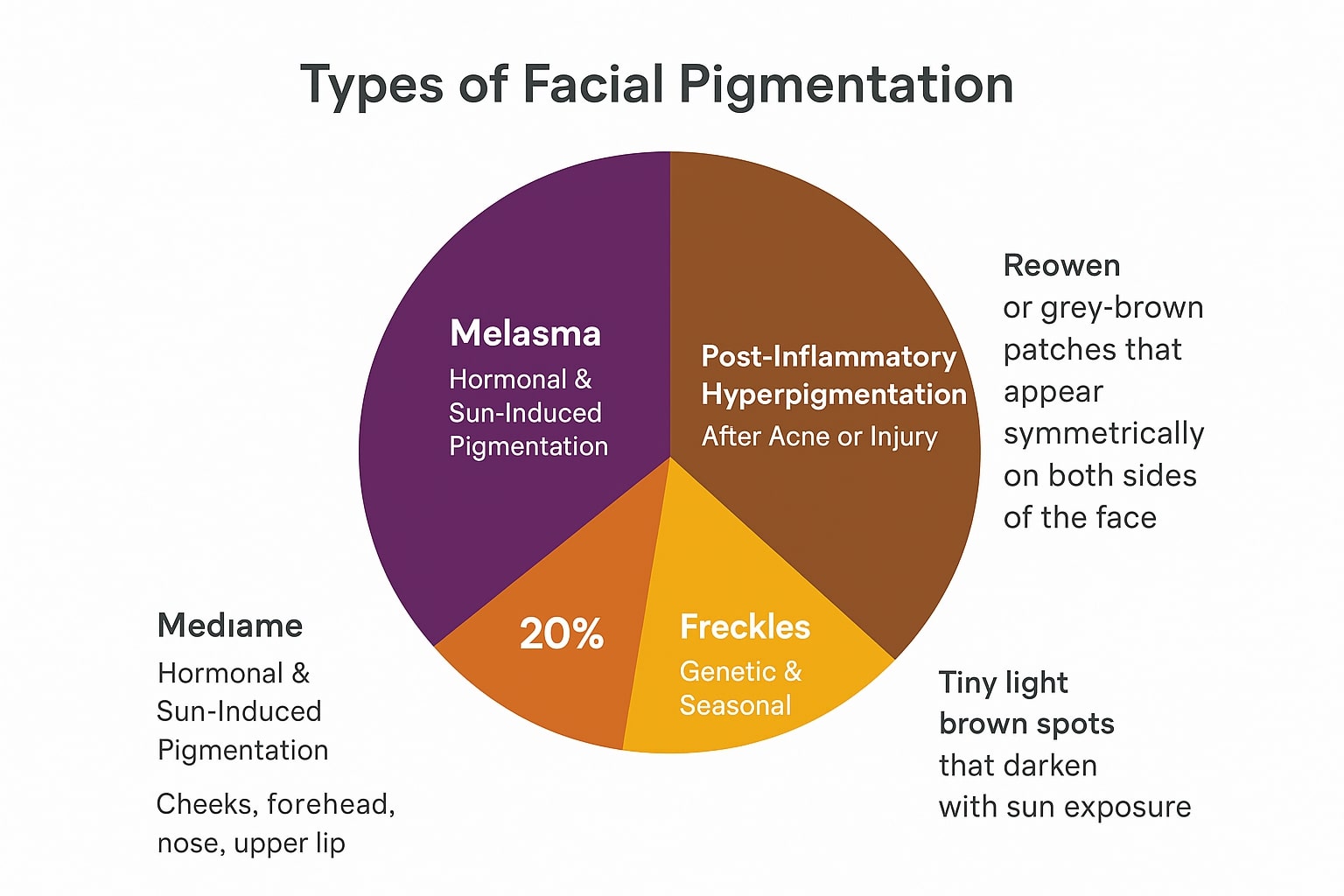
Melasma vs. Other Pigmentation: Spot the Difference
Not all dark spots are the same, and neither is their treatment.
There are many people who come to dermatology clinics in Anna Nagar, thinking that they have melasma, but later find it to be something entirely different: post-inflammatory hyperpigmentation, sun spots, or even freckles.
Although these conditions may seem quite alike at first glance, they are actually different in causes, behaviors, and treatment plans.
Here’s how to tell them apart, so you can treat your skin the right way.
Melasma vs. Post-Inflammatory Hyperpigmentation (PIH)
Melasma is characterized by symmetrical brown or grayish-brown discoloration of the cheeks, forehead, or upper lip. It is driven by changes in hormonal status, exposure to UV radiation, and genetic predisposition, not necessarily injury.
On the other hand, post-inflammatory hyperpigmentation develops after skin damage or inflammation, such as acne, eczema, burns, or harsh treatments. The dark mark you see is your skin’s way of healing itself.
Melasma is a chronic condition and often recurs with sun exposure.
PIH resolves gradually as the triggering factor, such as acne or irritation, is resolved.
Simply put, melasma is hormonal and environmental; PIH is reactive and temporary.
Melasma vs. Sun Spots (Age Spots / Lentigines)
Sun spots, also called age spots or solar lentigines, are brought about only by long-term sun exposure, and not by hormones. These are small, well-defined brown spots, mostly on areas that get the most sun: face, shoulders, and hands.
On the other hand, melasma forms larger, more irregular patches that are symmetrical and more likely to darken with hormonal changes.
If you’re seeing spots in isolation, rather than diffuse patches, it’s likely due to sun damage and not melasma.
Melasma: Patchy, spreads across both cheeks or forehead.
Sun spots: Small, round, and remain stationary in exposed areas to the sun.
Melasma vs. Freckles
Freckles are small, light brown spots that may appear anytime in childhood but darken with sun exposure. They are genetic, common in lighter skin tones, and usually harmless. Melasma tends to appear later in life, especially after hormonal shifts, such as those of pregnancy, or after extensive ultraviolet radiation exposure. Freckles lighten in winter and darken in summer. ???? Melasma remains throughout the year and only fades with treatment. So, if your pigmentation changes with the season, it’s probably freckles. If it persists and deepens with time, melasma might be the culprit.
Visual Comparison Chart
Diagnosis at Soul Skin Clinic:
Before/After Case Studies:
After 4 sessions of Fractional CO2 Laser spaced one month apart, the patient achieved over 70% improvement in scar texture and depth reduction. Skin resurfacing and collagen regeneration provided smoother, refined skin.
Male, 28, IT Professional – Ice Pick Scars (Fractional CO2 Laser)
Underwent 5 sessions of Microneedling with PRP. Noticeable improvement in skin firmness and reduction in boxcar scars were seen after the third session, with overall brightness and even tone by the fifth.
Female,24 Marketing Executive – Boxcar Scars (Microneedling with PRP)
A customised combination of Subcision, TCA CROSS, and CO2 Laser delivered significant improvement across multiple scar types. The results included smoother texture and even tone, with long-term collagen remodelling.
Female, 32, Teacher – Mixed Acne Scars (Combination Therapy)
Two sessions of Subcision with hyaluronic acid fillers gave instant improvement in skin depression and texture. Scars appeared less tethered and smoother after each visit.
Male, 19, Student – Rolling Scars (Subcision with Dermal Fillers)
A series of 4 light-to-medium chemical peels over two months effectively reduced pigmentation and improved radiance. The patient’s skin tone became more uniform with minimal downtime.
Female, 27, Designer – Post-Inflammatory Marks (Chemical Peels)
Why Choose Soul Skin Clinic:

Led by Expert Dermatologist – Dr. Charanya (MD Dermatology)
Led by Dr. Charanya (MD Dermatology), Soul Skin Clinic in Anna Nagar offers advanced, FDA-approved acne scar treatments tailored for Indian skin. With 8+ years of expertise, she provides safe, effective, and personalised solutions for lasting results.

Comprehensive Experience in Acne Scar Management
Dr. Charanya has successfully treated a wide range of acne scar types — from ice pick and boxcar to rolling scars — using scientifically proven methods. Her extensive experience allows her to create personalised treatment combinations for optimal and long-lasting results.

Personalised, Patient-Centric Approach
No two skins are the same. Each treatment plan at Soul Skin Clinic is tailored after a detailed skin analysis, ensuring that every procedure suits your unique skin type, tone, and scar pattern. This personalised care maximises results while keeping your skin’s health and safety the top priority.

Advanced Technology and Modern Techniques
The clinic is equipped with the latest dermatological devices and FDA-approved technologies, including Fractional CO₂ Laser, Microneedling with PRP, TCA CROSS, and RF Microneedling. These cutting-edge modalities deliver visible improvement with minimal downtime.

Trusted by Hundreds of Happy Patients
Soul Skin Clinic has become a trusted name in Anna Nagar for acne scar treatment. Patients appreciate not just the remarkable results but also the compassionate care they receive throughout their journey — from consultation to recovery.

Comfort, Care, and Transparency
Dr. Charanya’s warm and empathetic approach ensures a comfortable experience for every patient. Transparent pricing, clear guidance, and genuine care are central to the clinic’s philosophy, making Soul Skin Clinic a truly patient-first destination for skin rejuvenation.
Frequently Asked Questions
How many sessions will I need?
Most patients require 3–6 sessions, depending on scar depth, skin type, and the treatment method used. Your dermatologist will design a customised plan after assessing your skin.
Is the treatment painful?
Discomfort is minimal. A topical anaesthetic cream is applied before the procedure to ensure you remain comfortable throughout. Some patients feel mild warmth or tingling that settles quickly.
Can dark skin get laser treatment safely?
Yes. At Soul Skin Clinic, we use FDA-approved laser systems that are safe and effective for Indian and darker skin tones, minimising the risk of pigmentation or irritation.
When will I see results?
Visible improvement usually starts within 2–4 weeks, and your skin continues to build new collagen for several months after treatment.
Can makeup be worn after treatment?
Makeup should be avoided for 48 to 72 hours after treatment to allow the skin to heal. Once redness subsides, you can safely resume your regular makeup routine.
Are results permanent?
Yes. The improvement achieved is long-lasting, as treatments stimulate new collagen formation. However, maintaining a healthy skincare routine helps preserve the results.
What’s the best treatment for my scar type?
Each scar type responds differently — ice pick, boxcar, and rolling scars require specific methods. Our dermatologist will recommend a tailored plan after examining your skin.
How much does it cost in Anna Nagar?
The cost varies depending on the procedure — from ₹3,000 to ₹30,000 per session. Package plans are available, offering up to 20% savings.
Are there any side effects?
Mild redness, swelling, or peeling can occur temporarily. These effects are normal and subside within a few days with proper post-treatment care.
Can I go to work the next day?
Yes, most treatments have minimal downtime. For intensive procedures like CO₂ laser, you may need 1–3 days of rest.
Does insurance cover acne scar treatment ?
Insurance generally does not cover acne scar treatment in Anna Nagar clinic or elsewhere, as acne scar treatments are typically classified as cosmetic procedures rather than medically necessary ones. Therefore, most insurance providers do not include them in their coverage.
What if my scars come back?
Treated scars do not return, but new acne breakouts can cause new scars. Managing acne early and maintaining proper skincare helps prevent this.
How do I book a consultation?
Do you offer EMI or payment plans?
Yes, Soul Skin Clinic provides flexible EMI and payment plans to make multi-session treatments more affordable.
What’s the difference between laser types?
Fractional CO₂ Laser resurfaces deep scars, while RF Microneedling focuses on tightening and collagen stimulation. The choice depends on your skin type and scar severity.
Can you treat old scars (10+ years)?
Yes, even old or deep scars can be significantly improved using modern techniques like Subcision, CO₂ Laser, and PRP therapy.
Are there any age restrictions?
Treatments are suitable for adults aged 18 and above. For younger patients, procedures are considered only after active acne has cleared.
Do home remedies work for acne scars?
Home remedies may slightly improve pigmentation but cannot repair scar tissue. Professional dermatological treatments are necessary for lasting, visible results.
Ready for Smooth, Hair-Free Skin?
-
Clinic Hours:
Monday-Sunday, 12:00 PM - 8:00 PM