
Mole & Skin Tag Removal in Anna Nagar: Safe Laser Treatment
Table of Contents
ToggleSafe & Painless Mole Removal in Anna Nagar – Expert Laser Treatments
Moles are common, but when they start changing in shape or colour—or simply affect your confidence—it might be time to consider removal. Whether for medical or cosmetic reasons, mole removal in Anna Nagar is now quick, safe, and almost painless, thanks to modern dermatological techniques like laser and minor surgical excision.
When Should You Remove a Mole?
Not all moles need removal. Most are harmless clusters of pigment cells (melanocytes). However, a mole should be examined by a dermatologist in Chennai if:
- It changes in colour, size, or shape.
- It becomes itchy, painful, or starts bleeding.
- It’s located in an area prone to friction (neck, underarms, waistline).
- You want to remove it for aesthetic reasons.
Many patients in Anna Nagar choose mole removal to improve appearance, especially when moles are on visible areas like the face or neck.
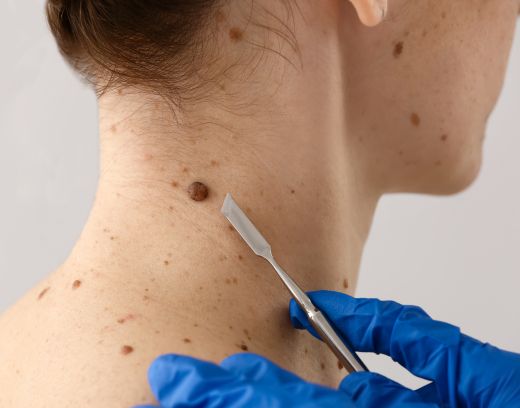
The ABCDE Rule
Dermatologists use the ABCDE rule to detect suspicious or potentially cancerous moles (melanoma):
- A – Asymmetry: One half looks different from the other.
- B – Border: Irregular or blurry edges.
- C – Colour: Varies across the mole (brown, black, red, white).
- D – Diameter: Larger than 6mm (the size of a pencil eraser).
- E – Evolving: Any noticeable change over time.
Skin cancer, especially melanoma, is one of the most dangerous types of cancer. The ABCDE rule serves as a critical guide to assessing one’s moles and finding the warning signs of this dangerous disease. Each letter in the rule corresponds with a characteristic that should be looked at closely.
“A” stands for Asymmetry. A mole is considered asymmetrical if one half does not match the other. Usually, harmless moles are perfectly rounded or oval. If you notice uneven shapes, this could be a warning sign of malignancy and may need additional examination.
The second letter “B” means Border irregularity. Healthy moles normally have smooth and even borders, whereas melanoma may feature jagged or blurred edges. Observing these features allows for the early detection of suspicious moles.
Next is “C,” which stands for Color. A variety of colors within one mole or uneven coloration, such as different shades of brown, black, or even red or white, may be a warning sign.
The “D” stands for Diameter; moles larger than 6 mm, about the size of a pencil eraser, also should be looked at more closely. While smaller moles can be noncancerous, significant changes in size can show the risk of melanoma. And finally, “E” stands for Evolving. If a mole changes in size, shape, color, or starts to bleed, itch, or crust, it may be malignant and requires urgent medical intervention.
These changes are easily caught early by regular self-examinations using the ABCDE rule. These are recommended monthly, with a doctor to be consulted if any of these ominous signs are noted. The key to effective treatment of melanoma is early detection, and this necessitates awareness about one’s skin. Therefore, in case of suspicion, consult a professional since he or she will make a proper diagnosis and inform one whether mole removal surgery is necessary or not.
If you notice any of these changes, schedule a skin check immediately. Early detection ensures quick, safe treatment.
Removal methods
At our Anna Nagar skin clinic, we offer two proven methods for mole removal, chosen based on size, type, and depth of the mole.
1. Laser Mole Removal
This method uses Q-switched or CO₂ laser technology to precisely target the mole without cutting the skin.
- Best for: Flat or superficial moles
- Procedure time: 15–30 minutes
- Recovery: Minimal downtime, slight redness for 2–3 days
- Scarring: Very minimal or none.
Laser mole removal is ideal for patients seeking a
2. Surgical Excision
Deeper or raised moles may require minor surgical removal under local anaesthesia. The mole is cut out completely, and the area is closed with tiny stitches.
- Best for: Larger or suspicious moles
- Procedure time: 30–45 minutes
- Recovery: 7–10 days
- Scarring: Minimal, fades with proper aftercare
Both techniques are safe and performed under sterile conditions by qualified dermatologists.
Mole Removal Cost in Anna nagar Chennai
The laser mole removal cost in anna nagar varies depending on mole size, number, and depth.
Here’s a general guide:
- Laser mole removal: ₹2,000 – ₹6,000 per mole
- Surgical excision: ₹5,000 – ₹8,000 per mole
If you have multiple moles, your dermatologist may offer a package rate. During consultation, you’ll receive a detailed cost estimate based on your specific needs.
Healing & scarring
After mole removal, the treated skin needs gentle care for proper healing:
- Keep the area clean and dry for 24 hours.
- Avoid makeup or harsh skincare for 3–5 days.
- Use prescribed antibiotic cream or healing ointment.
- Always apply sunscreen to prevent pigmentation.
Healing usually takes 5–10 days, depending on the method used. Mild redness or scabbing is normal and fades with time.
Scars, if any, are usually tiny and fade completely over weeks. Laser treatments, in particular, leave almost no visible mark.
Before & After Results from Mole Removal in Anna Nagar
Here are eight real examples of successful mole removals performed at our clinic:
Frequently Asked Questions
Is mole removal painful?
No, local anaesthesia is used, so you’ll feel minimal discomfort.
Can a mole grow back after removal?
Rarely, if a few pigment cells remain. Follow-up treatment can ensure complete removal.
Is laser mole removal safe?
Yes, it’s a medically approved and precise procedure with minimal side effects.
Will it leave a scar?
Laser treatments rarely scar; surgical scars are minimal and fade over time.
How long does healing take?
Usually between 5 and 10 days.
Can all moles be removed by laser?
Flat and small moles respond best; deeper moles may need surgical removal.
What about skin tag removal?
Skin tags can be removed in the same session with laser, safely and quickly.
How do I prepare for mole removal?
Avoid applying creams or makeup on the day of treatment.
Is the procedure permanent mole removal in Anna Nagart?
Yes, once removed completely, moles do not typically return.
How can I book a consultation?
You can book your appointment online or visit our Anna Nagar clinic for an in-person consultation.
Ready for Smooth, Hair-Free Skin?
-
Clinic Hours:
Monday-Sunday, 12:00 PM - 8:00 PM