
Skin Tag Removal Treatment in Chennai Using Advanced Laser & RF Technology
Table of Contents
ToggleIntroduction
Skin tags are small, soft growths that often appear on the neck, underarms, eyelids, groin, or other areas where skin rubs against skin. While they are harmless, many people choose to remove them because they can be uncomfortable, irritating, or cosmetically unwanted.
If you are looking for skin tag removal treatment in Chennai, this guide explains what skin tags are, why they form, how they are safely removed, expected results, and what to expect before and after treatment.
What Are Skin Tags?
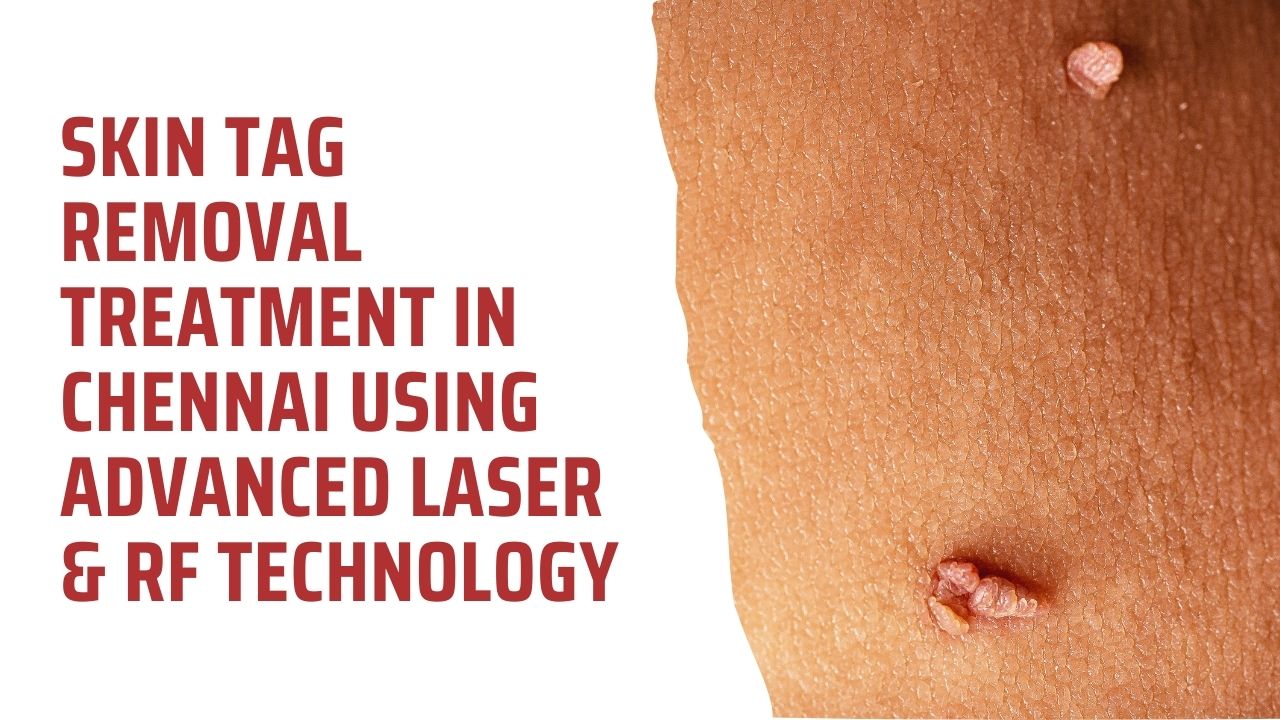
Skin tags (medically called acrochordons) are non-cancerous skin growths made of collagen fibers, blood vessels, and skin tissue. They are usually painless and soft, often attached to the skin by a thin stalk.
Skin tags can vary in size — from a tiny pinhead to a few millimeters — and may increase in number over time if left untreated.
Common Causes of Skin Tags
Skin tags can develop due to several reasons, including:
- Friction between skin folds
- Hormonal changes
- Genetics
- Weight gain or obesity
- Insulin resistance or diabetes
- Pregnancy
- Ageing
They are especially common in adults over 30 and tend to appear more frequently in warm, humid climates like Chennai.
Why Choose Professional Skin Tag Removal Treatment in Chennai?
Many people try home remedies like cutting, tying, or applying chemicals to skin tags. These methods can cause bleeding, infection, scarring, and incomplete removal.
Professional skin tag removal treatment in Chennai ensures:
- Safe and sterile removal
- Minimal pain
- No scarring when done correctly
- Immediate results
- Dermatologist supervision
Medical removal is quick, controlled, and far safer than DIY methods.
Skin Tag Removal Treatment Options
1. Radiofrequency (RF) Removal
This is one of the most commonly used methods.
- Uses controlled heat to remove the skin tag
- Quick and precise
- Minimal bleeding
- Fast healing
2. Electrocautery
- Uses electric current to remove the tag
- Suitable for small to medium skin tags
- Controlled and effective
3. Surgical Snip (Minor Procedure)
- Used for larger or thicker skin tags
- Performed under local anaesthesia
- Immediate removal
Laser treatment may also be used in select cases, especially for cosmetic areas like the face or eyelids.
What Happens During Skin Tag Removal?
The procedure is usually very simple:
The area is cleaned and examined
Local anaesthetic may be applied (if required)
The skin tag is removed using RF, cautery, or snipping
The area is treated to prevent infection
Aftercare instructions are given
Most procedures take 10–20 minutes, and you can return to normal activities the same day.
Lear More about MNRF treatment
Skin Tag Removal Treatment Cost in Chennai
The cost depends on:
- Number of skin tags
- Size and location
- Method used
Approximate cost range:
₹1,500 to ₹5,000 per skin tag
(Multiple skin tags may be offered package pricing)
Exact pricing is decided after a dermatologist’s evaluation.
Before & After Results – Skin Tag Removal Treatment
Here are Three real examples of successful skin tag removal treatment performed at our clinic:
Before: The patient had multiple small skin tags around the neck causing irritation from clothing and jewellery. The area looked uneven and uncomfortable.
After: After radiofrequency removal, the skin tags were completely removed in a single session. The skin healed smoothly within a week, with no visible marks.
Before: Skin tags in the underarm caused discomfort during shaving and sweating. The patient felt self-conscious wearing sleeveless clothing.
After: Following dermatologist-guided removal, the underarm area appeared clear and smooth. Healing was quick, and there was no scarring.
Before: A small skin tag near the eyelid affected appearance and caused irritation while blinking.
After: The tag was safely removed with precision under medical supervision. The eyelid healed naturally with no visible scar, restoring confidence.
Aftercare Tips
- Keep the area clean and dry
- Avoid scratching or picking
- Follow prescribed ointment instructions
- Avoid sun exposure on treated areas
- Do not apply home remedies
Healing usually takes 5–10 days, depending on the area.
Can Skin Tags Come Back?
Once a skin tag is removed, it does not grow back in the same spot. However, new skin tags may develop in other areas if the underlying causes (like friction or metabolic factors) continue.
Regular skin checks help manage them early.
When Should You See a Dermatologist?
- The skin tag bleeds or changes colour
- It grows rapidly
- You’re unsure if it’s a skin tag
- It’s located on sensitive areas like the face or eyelids
Professional evaluation ensures accurate diagnosis and safe treatment.
Technology Used for Skin Tag Removal at Our Clinic
At our clinic, skin tag removal is performed using advanced, dermatologist-approved technologies that ensure precision, safety, and excellent cosmetic results. The choice of technology depends on the size, location, and number of skin tags.
Plexr Plasma Technology
Plexr Plasma is a non-surgical plasma-based technology that works by sublimating unwanted skin tissue without cutting or stitches.
Benefits:
- High precision for small and delicate skin tags
- Ideal for facial and eyelid areas
- Minimal bleeding and downtime
- Promotes natural skin tightening and healing
RF Ablation (Radiofrequency Technology)
- Quick and effective removal
- Minimal pain and bleeding
- Faster healing with minimal scarring
- Suitable for multiple skin tags
CO₂ Laser
CO₂ laser technology allows precise removal of skin tags while minimising damage to surrounding skin.
Benefits:
- High accuracy and controlled depth
- Ideal for cosmetically sensitive areas
- Reduced risk of infection
- Smooth, even skin healing
Plasma Regeneration
Plasma regeneration technology not only removes the skin tag but also stimulates skin repair and collagen formation.
Benefits:
- Enhances skin regeneration after removal
- Improves overall skin texture
- Supports faster recovery
- Reduces chances of marks or uneven healing
Why Advanced Technology Matters
Using the right technology ensures:
- Safe and sterile procedures
- Minimal downtime
- Better cosmetic outcomes
- Reduced risk of scars or recurrence
All procedures are performed under dermatologist supervision, with personalised technology selection for the best results.
Conclusion
Skin tags are common and harmless, but they don’t have to be permanent. With professional skin tag removal treatment in Chennai, you can safely and effectively remove unwanted skin tags with minimal discomfort and excellent cosmetic results.
Instead of risking complications with home methods, dermatologist-guided treatment offers peace of mind, safety, and clean results.
Frequently Asked Questions
What is the best treatment for skin tag removal?
The best treatment for skin tag removal is medical removal by a doctor. Common methods include snipping, freezing (cryotherapy), or cauterization. These are safe, quick, and effective when done professionally.
How to remove skin tags during pregnancy?
During pregnancy, it is best to avoid home treatments. Most doctors recommend waiting until after delivery, as skin tags may disappear on their own. If removal is needed, a doctor may safely remove them using a simple procedure.
How do you permanently remove skin tags?
Skin tags are permanently removed through surgical cutting, freezing, or burning. Once removed, the same skin tag does not grow back, but new skin tags can develop elsewhere over time.
How to remove skin tags on eyelids?
Skin tags on eyelids should only be removed by a dermatologist or eye specialist. Home removal is unsafe due to the delicate skin and risk of eye injury.
What is the main cause of skin tags?
Skin tags are caused by skin friction, hormonal changes, genetics, obesity, diabetes, and aging. They are harmless and non-cancerous.
Ready to Sculpt Your Best Self?
-
Clinic Hours:
Monday-Sunday, 12:00 PM - 8:00 PM